

Table of Contents
- What Defines Modern Tailored Workwear
- The Role of Heritage Craftsmanship in Clothing
- Building a Business Casual Capsule Wardrobe for Men
- How to Style Rugged Workwear for Work
- Selecting Versatile Footwear and Accessories
- Caring for Your Tailored Workwear Investment
- Conclusion: Work-Ready Style That Lasts
- Frequently Asked Questions
Last Updated: September 4, 2026
The gap between a job site and a client meeting has never been wider, yet most men are expected to bridge it daily. Modern tailored workwear for men solves this by combining the durability of heavy-duty fabrics with the clean lines of a suit. At Evergreen Gear, we build professional-grade American workwear around this principle.
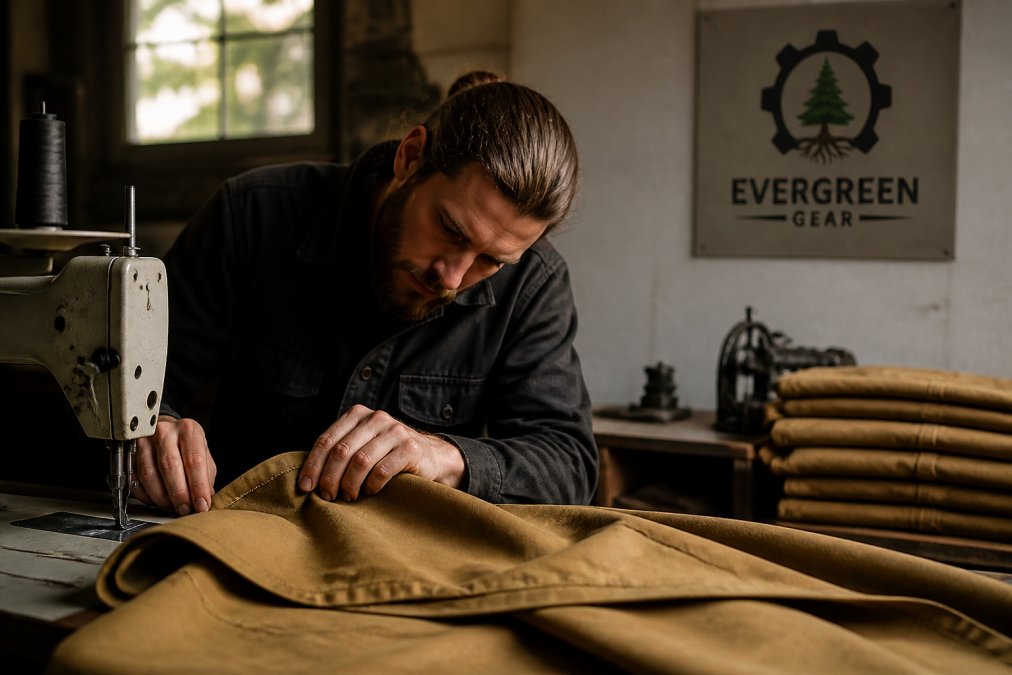
Tobacco— The Iron Tradesman Tool Vest
The old choice was binary: buy cheap, baggy gear that falls apart in a season, or wear a suit that restricts movement and costs a fortune to replace. Tailored workwear rejects both options. Below, we show you how to select, style, and maintain pieces that transition from the workshop to the street.
What Defines Modern Tailored Workwear
Modern tailored workwear is the intersection of rugged construction and refined design, where every seam, pocket, and button serves a purpose while maintaining a professional appearance. Unlike traditional workwear that prioritizes function alone, this category demands the garment also read as clean and intentional when you step off the site.
The core distinction comes down to cut and construction. A tailored work jacket uses the same heavyweight canvas as a classic chore coat, but the shoulders are set to align with your natural frame and the waist is trimmed to avoid excess fabric. This is the tailored fit principle: the garment follows your body without restricting it. For men who spend their day reaching, bending, and lifting, this means articulated elbows and gusseted underarms are non-negotiable features, not luxuries.
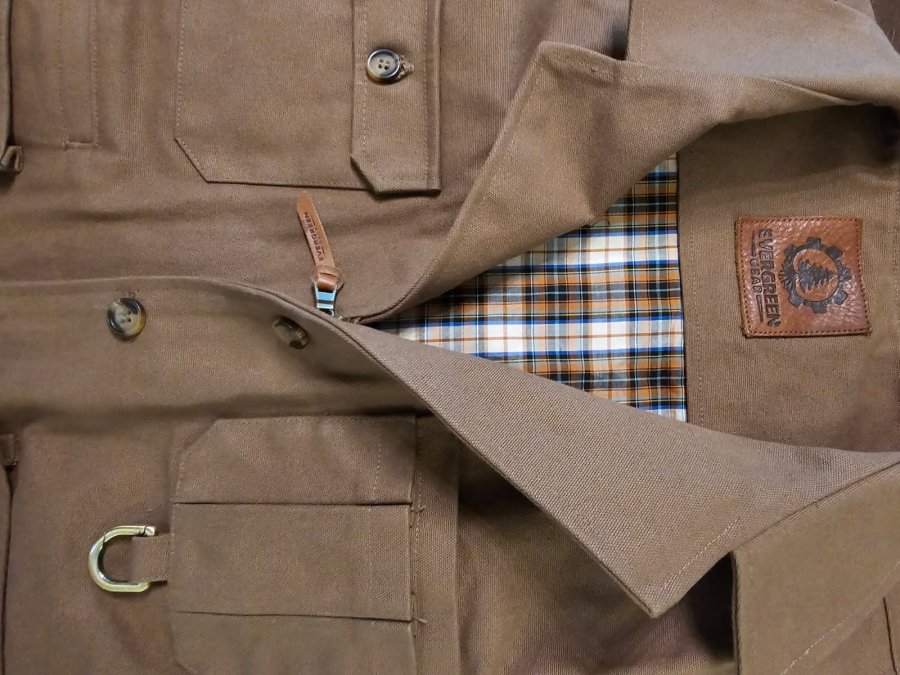
Tobacco Color—Iron Tradesman Tool Vest
The Role of Heritage Craftsmanship in Clothing
Heritage craftsmanship in clothing is the application of traditional manufacturing methods and material selection to produce garments that outlast modern fast-fashion alternatives. It is not nostalgia; it is a standard of quality that prioritizes longevity over volume. To make an informed choice, you need to understand the specific mechanisms that separate a five-year garment from a fifty-year one.
Fabric Weight and Weave
Fabric weight is the first metric to check. A heavy canvas or a wool-cotton blend in the 12-ounce range holds its shape under load and resists abrasion (peer-reviewed research). The weave matters equally: a tight, dense weave blocks wind and light rain better than a loose one and prevents snagging. For shirts, look for non-iron options in breathable materials.
Here is how specific weaves perform in practice:
- Duck Canvas (12-15 oz): The gold standard for durability. Its tight, plain weave is highly abrasion-resistant and breaks in stiffly, molding to your body over time. Best for jackets and vests.
- Twill (8-10 oz): Identified by its diagonal rib, twill is more flexible and drapes better than duck canvas. A better choice for shirts or lighter chore coats.
- Ripstop (6-8 oz): A nylon or cotton blend with a reinforcing grid pattern. It resists tearing and is lighter, but has a more technical, less formal look. Use it for summer-weight layers.
- Wool-Cotton Blends (10-12 oz): These combine the breathability and natural wrinkle resistance of wool with the strength of cotton. Ideal for trousers that transition from a job site to a client dinner without looking crushed.
Hardware and Construction Details
Authentic hardware is where cheap garments betray themselves. Solid brass or zinc-alloy buttons, reinforced bar-tack stitching at stress points, and double-needle seams determine whether a jacket survives its third year (the CDC). For tradesmen carrying tools, pockets need reinforced corners and strategic placement so weight doesn't pull the fabric out of shape.
Beyond the basics, look for these construction markers of true heritage quality:
- Bar-tack stitching: This is a dense, zigzag stitch used at stress points like pocket corners, belt loops, and buttonholes. It prevents ripping under strain. Check that these are present and tight, not loose or skipped.
- Felled seams: Also known as flat-felled seams, these are folded over and stitched twice, encasing the raw edge. This creates a stronger, more water-resistant seam than a simple overlock or serged edge. Run your hand along the inside of a jacket; a felled seam will feel smooth, not rough.
- YKK or Riri zippers: These are industry-standard for reliability. A heavy-duty zipper with metal teeth, not plastic, is essential for a work jacket that will see daily use.
The Case for Repairability
A key principle of heritage craftsmanship is that a garment is designed to be repaired, not replaced. A $200 jacket that can be re-waxed, re-buttoned, and re-seamed over a decade has a lower cost-per-wear than an $80 jacket that ends up in a landfill after two seasons (the EPA).

Building a Business Casual Capsule Wardrobe for Men
A business casual capsule wardrobe for men is a curated set of interchangeable pieces that cover every professional scenario from site meetings to office presentations. The goal is fewer, better items that all coordinate. Start with the layering pieces: a structured blazer or tailored vest, two to three heavyweight shirts, one pair of dark slim-fit trousers, and one pair of rugged chinos.
Core Pieces That Transition from Site to Office
The transition piece is the center of your wardrobe. A waxed canvas vest or unstructured jacket offers the polish of a blazer with the mobility of workwear. Pair it with a heavyweight t-shirt in a neutral tone, and you have an outfit that reads as intentional in both settings. The Evergreen Gear Iron Tradesman Tool Vest, available in Grey, Tobacco, and Khaki, is built for exactly this dual role, with concealed carry holsters and reinforced tool pockets that keep essentials organized without adding bulk.
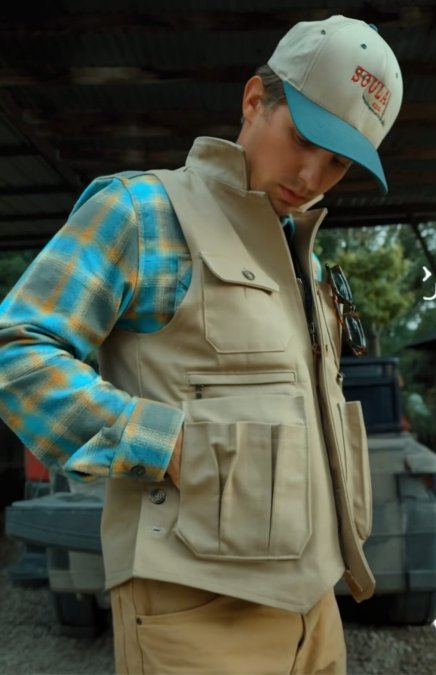
Khaki— The Iron Tradesman Tool Vest
Choosing a Color Palette That Works
Restraint wins in a capsule wardrobe. Build around a base of charcoal, navy, olive, and khaki, then add one or two accent colors that coordinate with all of them. This color palette coordination ensures that any top works with any bottom, which is the entire point of a minimalist wardrobe. Avoid loud patterns in your core pieces; save those for accessories if you need them.
How to Style Rugged Workwear for Work
Styling rugged workwear for work requires a shift in mindset: the goal is to look dressed for your day, not like you are wearing a costume of a laborer. The distinction comes down to fit and layering.
The Tailored Fit Principle, By Body Type
The tailored fit principle states that a garment should follow the line of your body without clinging or binding. For working men with developed shoulders and chests, this means buying for your largest measurement and having the waist taken in if necessary. A shirt that pulls across the back or a pant that restricts a deep squat is not tailored; it is too small.
Climate-Specific Styling: Adapting the Look
The 'modern tailored' look must adapt to your environment. A heavy waxed canvas jacket is a liability in a Houston summer and a necessity in a Minneapolis winter. Here is how to adjust the formula.
For Hot and Humid Climates (90°F+):
- Fabric is everything: Ditch the canvas and wool. Look for lightweight, breathable, and quick-drying fabrics. A 6-ounce cotton-linen blend or a technical ripstop with moisture-wicking properties will keep you cool.
- The vest is your best friend: A lightweight, unstructured vest in a breathable fabric (like a cotton-linen twill) provides the professional silhouette of a jacket without the sleeves. It keeps your core looking sharp while allowing maximum airflow.
- Color strategy: Wear light colors (khaki, light grey, white) to reflect heat. A light-colored shirt with a darker trouser is a classic, professional look that also helps you stay cooler.
- Layering for the office: If you are moving from a hot job site to an air-conditioned office, carry a lightweight, unstructured blazer or a merino wool cardigan. Merino wool is a miracle fiber for this; it is breathable, odor-resistant, and regulates temperature, making it perfect for transitional climates.
For Cold and Wet Climates (32°F and below):
- The three-layer system: This is non-negotiable. Your base layer should be a merino wool or a synthetic blend that wicks moisture away from your skin. Your mid-layer is for insulation, a heavyweight flannel, a fleece, or a quilted vest. Your outer layer is for protection: a waxed canvas jacket or a wool overcoat that blocks wind and water.
- Focus on the collar and cuffs: In cold weather, these are your heat-loss zones. A jacket with a high collar or a button-down collar shirt that can be popped will keep you warmer. Ensure your jacket cuffs are snug enough to seal in heat but not so tight they restrict movement.
- Footwear for ice and snow: Your Goodyear-welted boots are your best choice, but you need to ensure they have a lug sole for traction. For extreme cold, consider a pair with a removable wool felt insole for added insulation.
Selecting Versatile Footwear and Accessories
Footwear is where most workwear outfits fall apart. A polished upper on a boot with a genuine lug sole offers the grip you need on site while cleaning up sufficiently for an office. Look for shoes or boots with Goodyear welt construction, which allows resoling rather than replacement.
Accessories should be functional first. A leather work belt with a solid buckle carries tools without sagging. A canvas or leather watch strap withstands sweat and grime better than metal. If you carry a daily bag, choose one in the same color family as your boots. The principle is consistency: every visible item should look like it was chosen for a reason.
Caring for Your Tailored Workwear Investment
Garment care determines whether your investment lasts five years or fifteen. Heavyweight fabrics need less washing, not more. Spot-clean canvas and wool, and wash cotton pieces in cold water on a gentle cycle. Hang dry everything; the heat of a dryer breaks down elastic and shrinks natural fibers unevenly.
For waxed canvas, re-wax annually to maintain water resistance and the fabric's structure. Store jackets and vests on wide wooden hangers to preserve the shoulder shape. Rotate your pieces rather than wearing the same garment daily; this allows the fibers to recover and dramatically extends the life of the garment. A small investment in maintenance time yields a wardrobe that remains work-ready and office-appropriate for years.
Conclusion: Work-Ready Style That Lasts
The challenge of modern tailored workwear is finding pieces that respect both the demands of the job and the expectations of professional appearance. Most men settle for one or the other. The solution is a capsule wardrobe built on heritage craftsmanship, tailored fits, and heavyweight fabrics that look better with age.
Evergreen Gear builds apparel for this exact purpose. Our professional-grade American workwear combines heavy canvas, authentic hardware, and clean tailoring so you can move from the workshop to the street without changing clothes. Explore the Iron Tradesman Tool Vest for concealed carry and tool organization, or the Ultra Heavy Weight T-Shirt for a durable base layer. Get started with Evergreen Gear and build a wardrobe that endures from the first shift to the last.
Frequently Asked Questions
What is the 3-3-3 rule for men's workwear?
The 3-3-3 rule is a simple framework for building a business casual capsule wardrobe for men. It suggests choosing three core colors, three versatile pieces like a structured blazer, slim-fit trousers, and a non-iron shirt, and three types of footwear or layering pieces. This approach helps you create multiple outfits from a small number of high-quality items, ensuring your modern tailored workwear is practical and easy to mix and match.
How do I style modern workwear for a professional office setting?
Start with a tailored fit. Choose slim-fit trousers and a structured blazer in a wool-cotton blend. Layer a heavyweight t-shirt or non-iron shirt underneath. The key to styling rugged workwear for work is balance: pair a durable canvas vest or jacket with cleaner, more polished layers. This creates a professional appearance that respects the dress code while retaining the durability and comfort of your workwear.
What defines heritage craftsmanship in clothing?
Heritage craftsmanship in clothing refers to traditional manufacturing methods that prioritize durability and function. It involves heavyweight fabrics, authentic hardware, and construction techniques like reinforced seams that are built to last. When you buy garments made this way, you are paying for tangible qualities: fabric that holds its shape under load, zippers and buttons that survive years of use, and a fit that is cut for actual working bodies and freedom of movement.
What are the essential pieces for a modern tailored workwear wardrobe?
A solid wardrobe starts with a few key items: a durable tool vest or structured blazer, slim-fit trousers, a heavyweight t-shirt, and a non-iron shirt. Choose versatile pieces in neutral colors like grey, khaki, or navy for easy coordination. These items form the core of a business casual capsule wardrobe for men, offering the flexibility to dress for a client meeting or a day on the job site without sacrificing durability or style.