

Table of Contents
- What Separates Durable Workwear With Tool Pockets From Standard Gear
- Best Rugged Workwear for Tradesmen: The Iron Tradesman Tool Vest
- Durable Workwear Fabric Comparison: Cotton Duck, CORDURA, and Stretch Blends
- Tool-Specific Pocket Ergonomics: Why Placement Matters More Than Pocket Count
- How to Choose Workwear for Construction and Demanding Trades
- Layering Systems for Climate Control on the Jobsite
- Conclusion
- Frequently Asked Questions
Last Updated: September 11, 2026
What Separates Durable Workwear With Tool Pockets From Standard Gear
Durable workwear with tool pockets is apparel engineered so a working person can carry, reach, and secure the tools of their trade without digging through a bag. The difference from standard gear comes down to three things: fabric weight, pocket engineering, and reinforcement at the points that take the most abuse. This guide from Evergreen Gear covers what holds up on a jobsite in 2026 and which configurations suit which trade.
Most workwear sold today is designed to look the part, not carry the load. A standard pair of pants has four unreinforced pockets, none placed for a tool you'll pull twenty times a day, fine for light duty, but useless on a ladder with a tape measure, a driver, and a pencil and no free hand (osha.gov).
Best Rugged Workwear for Tradesmen: The Iron Tradesman Tool Vest
The strongest option for tradesmen who need durable workwear with tool pockets is the Iron Tradesman Tool Vest from Evergreen Gear, available at $279.00 in three colorways. It's built from heavy American canvas, cut for real working bodies, and laid out with a purpose-built tool configuration.
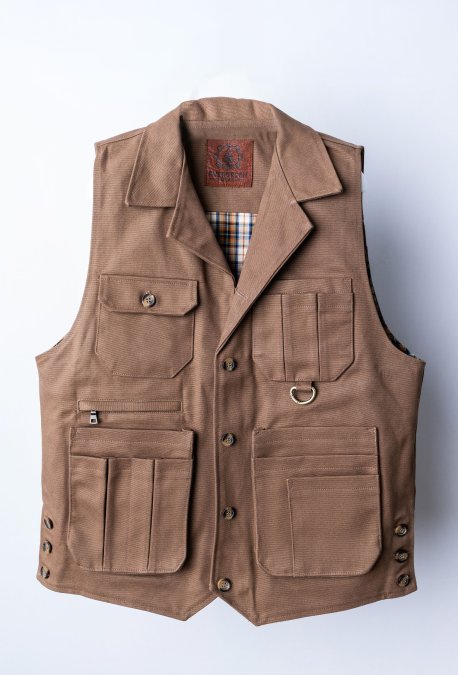
Tobacco — The Iron Tradesman Tool Vest
Colorway |
Best For |
Standout Trait |
|---|---|---|
Tobacco |
Contractors, builders, craftsmen |
Heritage tone that hides dust and wear |
Grey |
Electrical, HVAC, client-facing trades |
Neutral finish that works on and off site |
Khaki |
Outdoor sites, landscaping, field work |
Light tone built for high-visibility environments |
All three share the same core build: heavy American canvas, a balanced tool layout, discrete concealed-carry support, and American manufacturing. The vest puts tool weight on your shoulders instead of your hips.
Tobacco: The Heritage Canvas Option
Tobacco is for tradesmen who want a vest that looks as hardworking as they are. The earthy tone wears in rather than out, so dust, mortar, and jobsite grime blend into the fabric. Heavy American canvas holds its shape under load, so the vest doesn't sag when you load the pockets, ideal for contractors and builders moving between rough and finished spaces.
Grey: The Client-Ready Neutral
Grey is the modern professional's pick. Electrical, HVAC, and contracting work often means walking into someone's finished home, and grey reads clean without looking like you're trying too hard. The same heavy canvas construction that makes the Tobacco version rugged applies here.
Khaki: The Field-Ready Choice
Khaki is built for the man who works outdoors, in the field, and in the elements. The light tone is practical for high-visibility worksites, landscaping, and construction where you want to be seen. The structured cut moves with you through long days, and the canvas holds up to sun, dirt, and repeated loading.
Durable Workwear Fabric Comparison: Cotton Duck, CORDURA, and Stretch Blends
Fabric choice determines how long a garment survives, and the three main options behave very differently at the places that matter: pocket mouths, knees, hems, and the crotch seam. The useful comparison is by failure mode, where each fabric gives out first.
Cotton duck is a tightly woven, heavyweight cotton with a matte finish. It resists abrasion, softens with wear, and holds its shape under load, which is why it's the traditional choice for vests and jackets. Its weakness is moisture: once soaked it stays heavy and dries slowly, and repeated wet-dry cycles stiffen the fibers at fold points. CORDURA is a high-tenacity nylon, often blended into cotton or used as a reinforcement panel at knees, pocket edges, and hems. It resists tearing at pocket mouths far better than plain cotton, but a fully CORDURA-reinforced panel traps heat. Stretch blends add elastane so the garment moves with you, but elastane is the first component to fatigue: a stretch pant that fits perfectly in month one can feel loose through the seat by month twelve.
Fabric |
Abrasion Resistance |
Breathability |
Where It Fails First |
Best Use |
|---|---|---|---|---|
Heavyweight cotton duck |
High |
Moderate |
Fold points after repeated wet-dry cycles |
Vests, jackets, daily wear |
CORDURA reinforcement |
Very high |
Low |
Heat buildup under the panel |
Knees, pocket edges, hems |
Stretch blends |
Moderate |
High |
Elastane fatigue at seat and knees |
Pants for tight-space work |
Which one wins depends on the trade. For a vest, heavyweight cotton duck is the right call because it holds shape under load. For pants, a stretch blend with CORDURA reinforcement at the knees gives you mobility without sacrificing durability where you actually kneel.
The detail most fabric comparisons skip is how the fabric interacts with the pocket. A heavy tool like a framing hammer or cordless driver pulls down on the pocket mouth every time you move. On plain cotton duck, that load stretches the weave and the pocket sags. On CORDURA-reinforced pocket edges, the mouth holds its shape but the surrounding cotton can still fail at the seam if it isn't bar-tacked or riveted. That's why the best-built workwear layers: a durable base fabric, high-tenacity reinforcement at the pocket mouth and knee, and a stretch panel only where the body needs to move.
Tool-Specific Pocket Ergonomics: Why Placement Matters More Than Pocket Count
Pocket placement matters more than pocket count because a tool you can reach without looking gets used; a tool buried in a deep pocket doesn't. In workwear, pocket height, angle, and depth should be set by the tool the pocket is meant to hold, not by how many pockets the marketing copy can list.
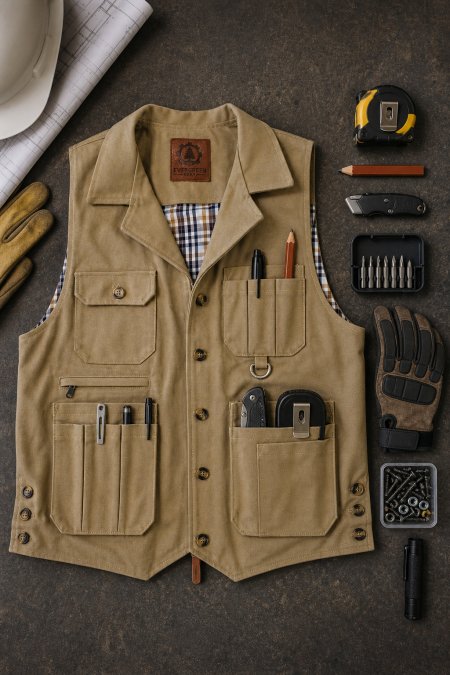
Think about how you actually work. A tape measure gets grabbed dozens of times a day, so it belongs at hip or chest height where your hand falls naturally. A driver or pliers you use less often can sit lower. A pencil needs a dedicated narrow slot.
A common mistake is buying gear by pocket count. Twelve pockets sounds better than six until you realize eight are too shallow, too deep, or angled wrong for anything you carry. Electrical, HVAC, and finish carpentry benefit far more from three well-placed pockets than from a vest covered in them.
How to Choose Workwear for Construction and Demanding Trades
Choosing workwear for construction and demanding trades comes down to matching the gear to your actual daily tool load, confirming the fit gives you mobility, and understanding how the garment behaves after six to twelve months of daily site use. Most people buy on looks or price, then discover the pockets don't work, the cut restricts them, and the fabric has already started to give out at the seams.
Match the Gear to Your Daily Tool Load
Start by emptying your pockets and pouch at the end of a normal day. That's your real load, not the idealized one. Group it into three tiers: tools you touch more than twenty times a day, tools you touch a few times an hour, and tools you need once or twice but must have on you. Tier one goes in the most accessible pocket, tier two in secondary pockets, tier three in secured or zippered pockets.
If your load is heavy and hip-carried, a tool vest moves that weight to your shoulders, which most tradesmen find easier to carry through a full day. If your load is light, well-built work pants with reinforced pockets are enough. The mistake is buying for the heaviest day you've ever had rather than the average day you actually work.
Fit Check: Mobility Without the Baggy Look
Fit is where modern workwear brands often fail working bodies. You want a cut that clears your chest and shoulders without billowing, and pants that let you squat, kneel, and climb without binding. Test three things before you commit: raise both arms overhead and check the hem doesn't ride up past your belt line, squat deep and check the crotch doesn't pull, and reach across your body and check the shoulders don't restrict you.
If you're a bigger guy and most modern cuts fit wrong through the chest and shoulders, that's a sizing problem, not a you problem. Look for garments cut for working bodies rather than fashion proportions. A gusseted crotch and articulated knees do the most for mobility.
How Gear Actually Holds Up After 6-12 Months
New gear always looks good in a review. The useful question is what it looks like after a year of daily use.
The first thing to go on most workwear is the pocket mouth. A tool pulled dozens of times a day abrades the fabric at the opening, and on unreinforced cotton the weave thins and eventually tears. Look for bar-tacks or rivets at the corners of every pocket you'll load heavily, the cheapest durability feature a manufacturer can add.
The second is the knee. Kneeling on a hard surface compresses the fabric and grinds it against concrete, and a single-layer cotton knee typically shows thinning within a season of daily kneeling. A CORDURA-reinforced or double-front knee panel roughly doubles the time before that wear becomes a hole, worth paying for if you kneel constantly (osha.gov).
The third is the crotch seam and seat, where stretch blends fatigue and non-stretch pants blow out. A gusseted crotch spreads the stress across a panel instead of concentrating it at a single seam, the difference between a pant that lasts a year and one that lasts three.
A common pattern among tradesmen who track this: the garments that survive longest aren't the heaviest ones, they're the ones with reinforcement in the right three places, pocket mouths, knees, and crotch, and a base fabric light enough to dry out overnight. A 14-ounce duck vest with riveted pockets will outlast a 20-ounce jacket with stitched-only pockets, because the failure point isn't fabric weight, it's stress concentration.
Layering Systems for Climate Control on the Jobsite
Layering works because it lets you add or remove insulation without changing your tool-carrying setup, which matters when the same vest has to work in a 40-degree morning and a 70-degree afternoon. The standard three-layer approach applies: a moisture-wicking base layer, an insulating mid layer, and a weather-shedding outer layer.
The tool vest sits over the base and mid layers, so it needs to be sized to fit over them rather than against your shirt. A DWR finish on an outer layer sheds light rain and keeps the canvas from soaking through, though it needs reapplying as the coating wears. Breathability matters as much as water resistance, because a garment that traps sweat leaves you colder once you stop moving.
For most tradesmen, a two-layer system covers the majority of the year: base layer plus vest in mild weather, add a mid layer when it drops. Keep the outer shell in the truck for the days that turn. The point of layering isn't to own more gear, it's to carry the right amount for the day you're actually having.
Conclusion
Getting the gear right is a decision you make once and live with for years, which is why it's worth being deliberate about fabric, pocket placement, and fit rather than buying on price alone. Evergreen Gear builds the Iron Tradesman Tool Vest at $279.00 from heavy American canvas, with a purpose-built tool layout, discrete concealed-carry support, and American manufacturing behind it. If you want durable workwear with tool pockets that holds up from the workshop to the street, the Iron Tradesman is built to work, built to last, and built here. Shop now and carry your tools the way the job actually demands.
Last Updated: September 11, 2026
Frequently Asked Questions
What features should I look for in durable workwear with tool pockets?
Focus on four things: reinforced stress points (riveted or triple-stitched seams at pocket corners), abrasion-resistant fabric like heavyweight cotton duck or CORDURA reinforcements, pocket placement that matches how you actually reach for tools, and a gusseted crotch or articulated knees for mobility. Zippered security pockets and dedicated knife clip patches are worth having if you carry high-value tools or EDC items. A tool vest like the Iron Tradesman concentrates all of this into one layer you can wear over any shirt.
Are work pants with tool pockets worth the investment for construction?
Yes, if you're replacing cheap gear every few months. Heavyweight cotton duck and synthetic blends resist abrasion far longer than lightweight denim or thin twill, and reinforced knees and kick plates stop the wear points that kill budget pants first. The math favors buying once: a $279 tool vest with heavy American canvas and purpose-built pocket layout typically outlasts several rounds of discount workwear, and it carries tools better every day in between.
How do I choose the right fabric for heavy-duty work pants?
Match fabric to your environment. Heavyweight cotton duck (12 oz and up) handles abrasion and holds shape under tool load but dries slowly. Synthetic blends with stretch move better in tight spaces and dry faster. CORDURA reinforcements at knees and pockets add tear resistance where it counts. If you work outdoors in wet conditions, look for a DWR finish to shed light rain. For most trades, a canvas vest layered over a breathable base gives you the best of both.
How should work pants with tool pockets fit for maximum mobility?
You want room to squat, kneel, and climb without fabric binding. Look for articulated knees, a gusseted crotch, and enough rise that your shirt stays tucked when you reach overhead. The fit should be trim enough to avoid snagging on equipment but loose enough that pockets don't pull tight when loaded. If you're broad through the chest and shoulders, check the cut before buying: workwear sized for actual working bodies fits differently than fashion-forward slim cuts.
What are the most durable workwear brands for professional tradesmen?
The brands that last share common traits: heavyweight American canvas or CORDURA-reinforced fabric, triple-stitched seams, riveted stress points, and hardware that doesn't fail. Evergreen Gear builds to those specs with the Iron Tradesman Tool Vest, made in the USA from thick American canvas with a purpose-built tool layout and concealed-carry support. The 5.00-star rating from customers reflects what matters most: gear that holds up past the first season.